
The Ultimate Guide to Car Camping
We love car camping and have camped several times while traveling up and down the East Coast. There are a lot of benefits to car camping over tent camping, and we want to break down why you should give it a try!
*Disclaimer: Some links on this post are affiliate links, meaning we get a small kickback when you purchase from a link with no extra cost to you! This helps us as creators bring you more content like this – thank you for your support!
3 Car Camping Tips for Beginners
It can be pretty intimidating to think about camping and all that you’ll need, especially if you did not grow up camping. If you don’t know, car camping is slightly different than regular camping. Car camping is, as the name implies, sleeping in the back of your car (or truck) instead of sleeping in a tent. This blog post will help you to break down everything you’ll need as a newbie for your first time car camping to make it more manageable and exciting! We have three tips for getting started.
Tip #1: Dial in your sleep setup. Not getting a good night of rest can dampen any adventure, no matter how positive you are! We’ve been there after some pretty rough sleepless nights, and want to help you to get the best night possible while camping. Here is a step-by-step to help you pick the best pieces for your nighttime routine and help you sleep more soundly on the road.
- Leave the bulky air mattresses and cheap, flimsy sleeping camp pads at home. Instead, opt for a car-specific air mattress tailored to your vehicle. We recommend the car mattresses by Luno, HeyTrip, or Lost Horizons (though it looks like they’re no longer in business). We LOVE our Lost Horizons air mattress. It’s a combination of foam and air and seriously delivers the best back support for a camping pad I’ve ever slept on. For car camping, you don’t need to be super focused on R ratings for mattresses because your car provides much better insulation and heat retention than a regular tent.
- Use a fitted sheet on your mattress. This helps provide a little extra comfort, cuts down on noise while sleeping, and provides that soft mattress feel.
- Check the weather ahead of time for your trip, and bring a weather-appropriate sleeping bag. We love our Coleman sleeping bags as they’re rated for 30 degrees, and keep us plenty warm in cooler weather, but not too warm in summer heat.
- Bring your favorite pillow from home; don’t use a cheap one or an inflatable one. You’re camping, not backpacking! Using your pillow increases your chances of having a good night of sleep
Tip #2: Leave No Trace. This should be a no-brainer for camping, and is more of a reminder than it is a tip. As people who go camping, we should take care to act responsibly and be good stewards of nature, and take care of our environment. How can we take care of nature so that it lasts for generations to come? Here are the Leave No Trace Principles:
- Plan ahead and prepare
- Travel and camp on durable surfaces that are already designated camping spaces. Don’t create your own – this can damage fragile ecosystems, especially in desert places.
- Dispose of waste properly – yours and your pets. Use compostable trash bags and toilet paper to clean up.
- Leave what you find – never take home plants, rocks, or sand. What came from nature stays in nature!
- Minimize camfire impacts and always put out flames before you leave them.
- Respect wildlife – photograph them, but don’t touch them or get too close
- Be considerate of others – aka don’t blare loud music
Tip #3: You don’t need expensive gear. Car camping is relatively easier than tent camping, as you don’t need to buy as much gear. A sleeping pad, a bag, and a pillow are the easiest way to car camp. You can find all of these items at thrift stores or secondhand through outdoor companies like REI. Most of our gear is thrifted, and we encourage you to do the same!
Why Car Camping? 4 Reasons to Ditch the Tent
- Weather protection and resilience. Ten poles bend and break, canvas tears and leaks. Your tent is only as sturdy as its designer, and they lose their waterproofing after a few years, requiring constant attention. Camping in your car, however, provides a hard shell of protection and can withstand all kinds of gnarly weather and wind.
- No more fumbling. Tents and tent poles can be cumbersome to set up and can be a pain to set up, especially in foul weather. When car camping, setup is as easy as pulling into your campsite.
- Better night’s sleep. Sleeping on a flimsy camp pad on rough ground can be annoying and painful. Tents are also loud and noisy, especially if you are not used to sleeping with the sounds of nature.
- Safety First. Camping in a car provides a sense of security you can’t achieve sleeping in a tent. Locking the car doors at night is one of our favorite aspects of car camping, especially in grizzly country. Sleeping in a car keeps you off the ground, which means you’re away from snakes, spiders, scorpions, etc.
What to Pack?
Car camping allows you to pack a little less than tent camping, because you oftentimes down need as many layers to keep warm.
- Your sleep setup. Mattress, blankets or sleeping bag, and pillow.
- Water & food. Without them, you literally won’t get anywhere.
- Coolers & camp stoves. You can’t go camping without an easy way to keep food cool, and make your own even if you don’t have a campfire ring.
- Headlamps & lanterns. You don’t want to be caught after dark without one of these. Essential for late-night bathroom runs or for dark, stormy days. Always have extra batteries or auxiliary power banks and charging cords. We love solar-paneled battery chargers.
- First Aid Kits. Accidents happen, so it’s essential to be prepared for when they do. Most accidents happen when you’re out of cell service and far from help, so making sure you have a fully stocked medical kit with you is essential. Take a course or read a book about backcountry safety and medicine to ensure you’re fully prepared.
- Window Shades. We ordered these window shades from Weather Tech to help keep the sun out of our car and to make us feel a little bit more secure inside without people being able to look in. The nicest part about these is that they are reversible. You can put the black side out to draw in heat to warm up the car, or keep the silver side out to repel heat and keep your car cool.
- Fuel and extra fuel. Don’t forget to fill up your tank. Parks and National Parks often have very few gas stations, and if they do, they are far and falling apart. There is nothing worse than realizing you are very far from a gas station and you’re sitting on empty.
- Jumper cables and a battery charger. This goes without saying, but every car should have a pair of jumper cables in it. Even if you never need to use them, a stranger might, and you can be that helping hand.
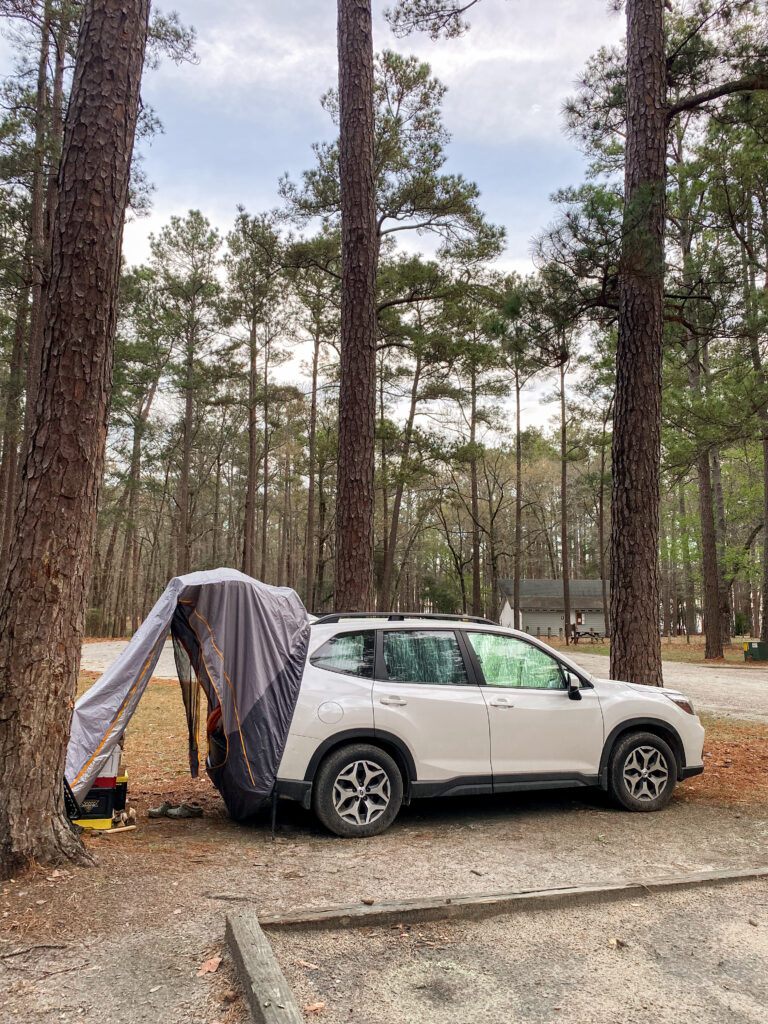
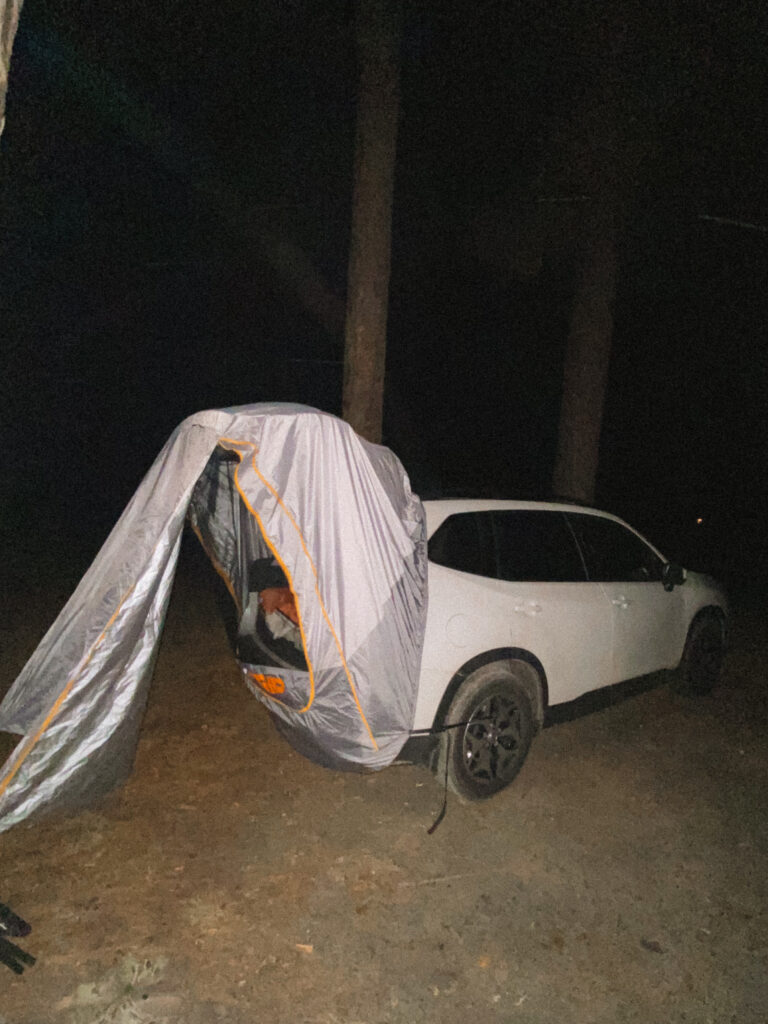
- Bonus: A car camping tent. We love our car camping tent by HeyTrip. It attaches to the trunk of our Subaru when the trunk is open, allowing air flow on hot nights and a little extra foot room for us (both Grant and I are pretty tall people!)
- Most importantly, a car! A truck or van works too, but you cannot go car camping without a car. While you might dream of a fancy van with a running sink or plush seats, any car can be made into a mini camper for a weekend. We love sleeping in the back of our Subaru, but have camped in the bed of our pick-up as well.
Other things to bring.
There are other things you might want to bring while car camping to make your stay more comfortable.
- Never forget sunscreen and insect repellent.
- Kitchen essentials include a cutting board, a two-burner stove, and a knife set.
- Hygiene helpers like baby wipes, hand sanitizer, and a shower bag.
- A table and camp chairs
- Miscellaneous fun items like board games, frisbees, and hammocks.
- A mat and shoe bags to keep your feet and shoes clean, and to not drag dirt into your sleeping bags.
Where to Car Camp?
State Parks are the best option as they have regulated campsites and bathhouses to make camping the easiest. They are also public, so just about anyone can access them. Free camping is also a surprisingly easy choice to find once you know what to look for. Free camping consists of everywhere from Walmart parking lots to remote National Forests and BLM backroads.
Gear Storage
Bringing your favorite hobbies with you while camping can make your trip more fun. Whether it’s a mountain bike, a surfboard, a fishing pole, or hiking boots, you need to store them while traveling. One of the trickiest parts of car camping is storing things. Messy cars can lead to frustrating moments on the road and lost items. A clear organization system will make camping a breeze and your trip much more enjoyable.
- Develop organization systems. All road trip organization boils down to one word: systems. Keeping things organized will keep you sane. Systems you keep in place will eventually feel like second nature and help you find things in the darkness or sudden moments when in need.
- Use the front seats as storage. We love using our front seats, especially our passenger seat, as storage while sleeping. We typically try to leave our driver’s seat open in case of an emergency, but we’ll typically store duffels and backpacks up front with water and food on the floorboards.
- Use clear plastic tubs: Being able to see where everything is is crucial in a small space. See-through plastic allows you to see and locate items quickly, but also offers a compact and sturdy storage option to prevent things from.
- Smart rooftop storage. Rooftop storage is perfect for keeping things out of the car and organized. We like lockable roofboxes or sturdy duffles that are weatherproof. They can be used in summer and winter alike.
- Under the car storage. Storing items in hard totes under the car can be particularly helpful if you need to have some more room in your car and don’t have storage uptop. Surfboards, dry wood, or even tools can be stored under your car.
5 Tips for Car Camping in Summer
#1 – Pay attention to the sun. Shade is crucial to keeping cool, especially while car camping in the summer. Your car can act like a hotbox, heating you up and making it hard to be cool. If you arrive at your campsite in the evening, make sure to pay attention to where the sun will rise the next day.
#2 – Crack the windows for airflow. Stuffy air can make the heat feel stifling. Try putting mesh window covers over your door and leaving your windows down to allow for good airflow while you’re sleeping at night. This also prevents bugs from getting in and eating you up!
#3 – Use a fan. Bring your own battery-powered compact fan to help keep you cool. Some fans even run off a car jack or a USB, making it a versatile essential for camping in warm weather.
#4 Use a sheet instead of a sleeping bag. Sometimes it’s just too hot to sleep in a sleeping bag, so bring an extra bedsheet along to sleep under instead.
#5 Stay Hydrated. This goes without saying, but it’s important to stay hydrated while camping in the summer heat. Bring good coolers, lots of water, and ice. If you have access to fresh water, bring a filtration system to help you stay stocked.
8 Tips for Car Camping in Winter
#1 – Increase Insulation: While most mattresses will keep you comfortable in your car, in extreme cold, adding an extra layer is necessary. Here are a few tips to boost your warmth while car camping in the winter:
- Add a thick fleece or wool blanket between your sleeping bag and mattress.
- Wrap the mattress in a thick blanket.
- Layer a closed-cell foam sleeping pad, like these affordable options from Therm-A-Rest, beneath the air mattress.
The point of this is to add extra warmth without breaking the bank. Experiment and find the best system that works for you.
#2 Layer Smart. If you’re camping in the winter, make sure you are layering your clothing well. Start with a warm wicking wool layer, like merino wool, before adding a down puffy jacket for warmth and finishing off with a breathable shell to stay dry. The best part is that you can tweak this system based on how warm or cold it actually is.
#3 Avoid Cotton. Cotton might be good for daily wear, but you shouldn’t use it in the wintertime. Cotton does not wick sweat well, and if you sweat, it will stay wet for hours. It has a slow drying time, which can be dangerous in the cold.
#4 Insulate Your Windows. As I mentioned earlier, use window shades to block drafty air from coming in through the glass and to draw heat into the car. You can also use a roll of Reflectix cut to the shape and size of your windows and glue magnets on it to help it stay up.
#5 Privacy Curtains. You can always hang a privacy curtain behind the driver’s seat to close off the back. This allows you to minimize the space that you are actually heating up, and will keep you warmer at night.
#6 Run the Heater. Run the heater on your way to the campsite. This is temporary as your car will cool off once you’re set up, but it will at least help you to stay warm while getting ready for bed.
#7 Hot Water Bottle Hack. Boil water in a Jetboil for easy heating, pour it into a leak-proof Nalgene, and screw the lid on tight. Toss it at the end of your sleeping bag to keep your feet nice and toasty through the night. The bottle will provide hours of heat, making it a more long-term solution for warmth. Another benefit of this is that you will have unfrozen water to drink in the morning!
#8 Condensation and Wet Gear. Here are a few ways of handling and minimizing condensation on your camping trip:
- Store wet gear outside the car. Towels, snowboards, wetsuits, etc. Hang on a line to dry, or use a lockable roofbox.
- Use a “utility towel” to dry things. Typically, a quick-dry towel is used to wipe up condensation as soon as it appears to minimize moisture and wetness.
- Crack a car window. Believe it or not, airflow is critical for winter camping. Crack a window in the front and another in the back to create a cross breeze, allowing moisture to escape and minimizing chances of condensation.
Cooking from your Car
Car camping doesn’t mean you have to have dehydrated dinners for every meal. If you bring a two-burner cook stove, a cooler, and a few other essentials, you can make delicious meals like you would at home.
Car Cooking Tips:
- Bring a sturdy, packable table that you can keep level to cook on.
- Bring a well-insulated and reliable cooler. A good cooler will keep food and water cold for days, but also acts as extra counter space.
- Two-burner stoves are the key. Using a two-burner stove increases your cooking capacity, especially if you are camping with your family. They also allow you to do more things with food, like simmering dishes or making two dishes at once.
- One-burner stoves are good for quick meals or solo travelers. Using one like a Jetboil is great for making a pack of noodles, soup, or even making a quick cup of coffee.
- Keep Kitchen Gear organized. This goes back to keeping your car organized in the very beginning of this post. Stash all of your cookware include utensils, plates, cups, and bowls, in a single tub for easy access.
- Use gear storage bags. Use gear storage bags with magnets that can attach to the side of your car to help you keep things organized and off your table. They can be used for anything from shoe storage to utensil and food storage. They could even work as a camp trash bag!
Car Camping Safety Tips
Last of all, let’s talk about safety while car camping. Safety comes first. Here are a few things to keep in mind when planning your camping trip.
- Tell someone your trip details, including locations and when you should be leaving and arriving. This could be a friend, a family member, or a local ranger. If you end up needing to be rescued, this information could save your life.
- Check the weather. The weather is fickle and can change faster than anyone could ever guess. If you are driving through the desert, a sudden rainstorm could cause flooding. Pay attention to the weather and plan your trip accordingly.
- Make sure you are stoked on food and water. Do your research too. Will your location have readily accessible drinking water? Do you need to bring a water filter?
- Bring an off-grid communication device. A device like a Garmin mini InReach could potentially save your life, so you have a means of emergency communication.
- Do not sleep with your car running. While it’s safe to sleep in your car while it is off, it’s dangerous to sleep while it’s running. Dangerous exhaust fumes can transport potentially fatal carbon monoxide into your vehicle.
Whew, that was a long post, but thank you for following along! I hope this helped you gain confidence in planning your next car camping adventure!

Be the first to comment